Field notes · Nº 06 Judgment
Strategy is choosing the problems you want to have.
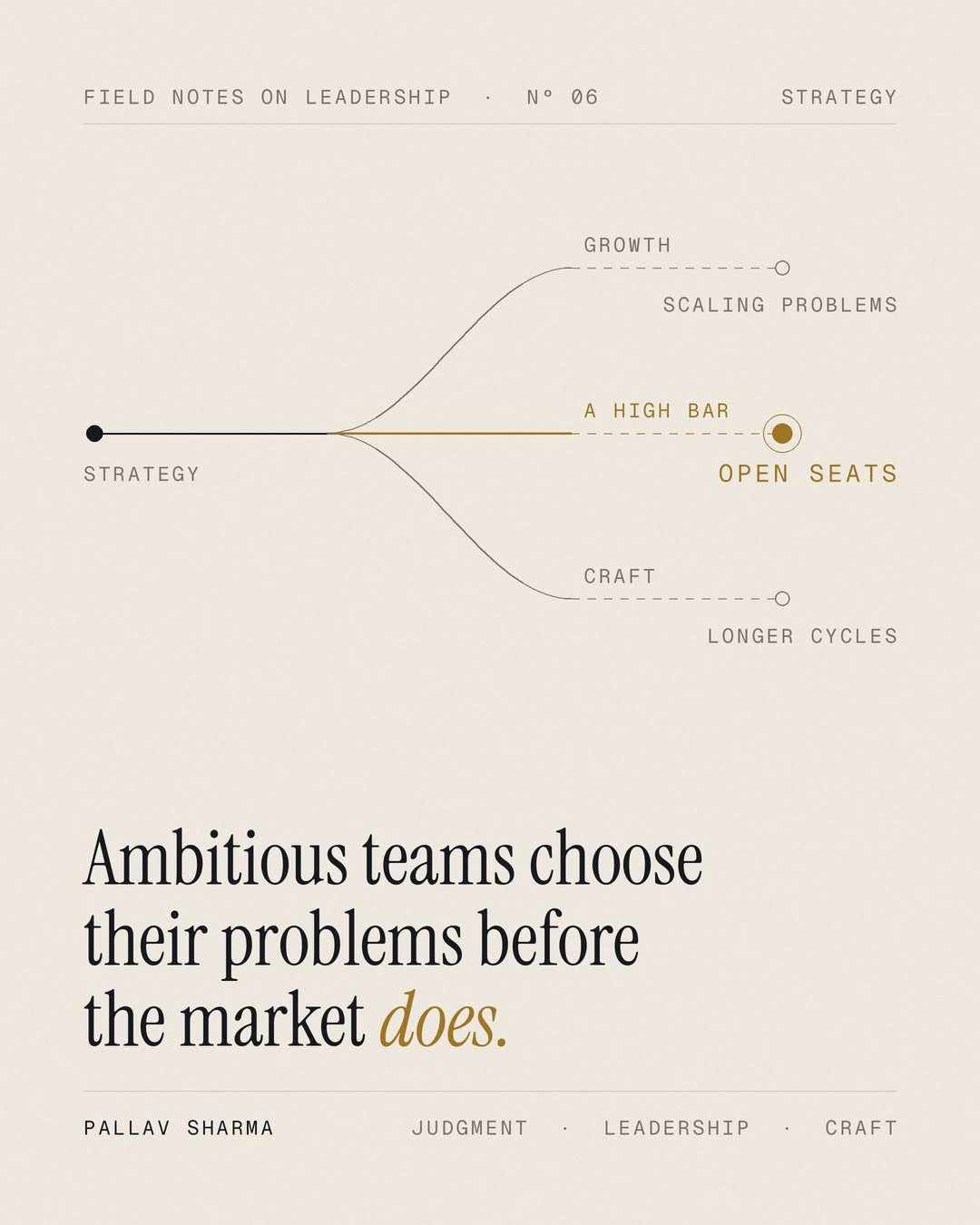
Growth buys you scaling problems.
A high hiring bar buys you open seats.
Craft buys you longer launch cycles.
Ambitious teams choose their problems before the market does.
Going deeper
Every strategic choice comes with a set of problems attached. Leaders who name those problems in advance turn them from surprises into planned work.
Why it matters
Teams spend the most energy when they treat expected problems as emergencies. When a team chooses rapid growth, scaling strain is the plan working. When it holds a high hiring bar, open roles are the price of quality. Naming the problem early protects morale and keeps the strategy intact when the pressure arrives.
Naming the chosen problems also sharpens future decisions. When a new opportunity appears, the team can ask one question: does it bring problems we have already chosen, or new ones we have not? The answer usually makes the decision obvious.
A practical method
- Write the choice in one sentence: what you are optimising for this year.
- List the problems it buys: the strain, cost or delay that will follow if the choice succeeds.
- Decide which of those problems you accept, and say so to the team in plain words.
- Prepare for each accepted problem: a budget, an owner or a process that absorbs it.
- Review every quarter: if the problems you see are not the ones you chose, the strategy has drifted.
What it looks like in strong teams
Leaders say “this is the problem we chose”, and the room settles. Trade-offs are written down before they are felt. Teams spend their energy on the problems that come with progress and read them as evidence that the strategy is working.
Choose the problems worth having, and every hard week becomes a mark of progress.

Co-founder & CTO · About